Modal pitch space
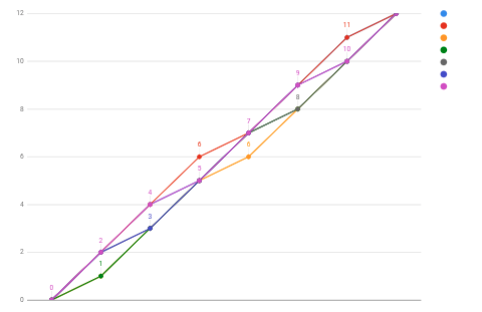
Seven rotations of the diatonic collection share the same pitch material but change the placement of the half steps—and with it, the center of gravity.
MUSIC / THEORY
A practical system for moving from pitch to time to instrument to musical culture—then returning to the instrument with more ways to hear and play.
THE MUSIC MAP
These ideas form a connected toolkit. A modal color can suggest a tuning; a tuning can expose a voicing; a rhythmic grid can put it in motion; an instrument and a listening tradition can give the idea a voice.
Seven rotations of the diatonic collection share the same pitch material but change the placement of the half steps—and with it, the center of gravity.
Ratio-based intervals and equal temperament answer different practical needs. The tension between harmonic purity and transposition flexibility is useful to hear, not erase.
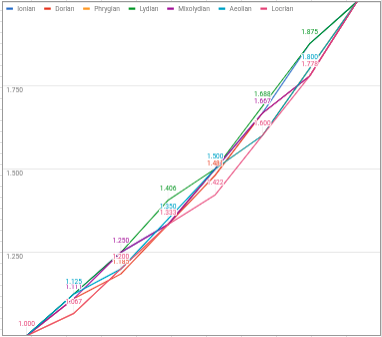
Tuning makes voicing a compositional choice before a note is fretted. Change the open-string architecture and change the harmonies, drones, and shapes the guitar naturally invites.
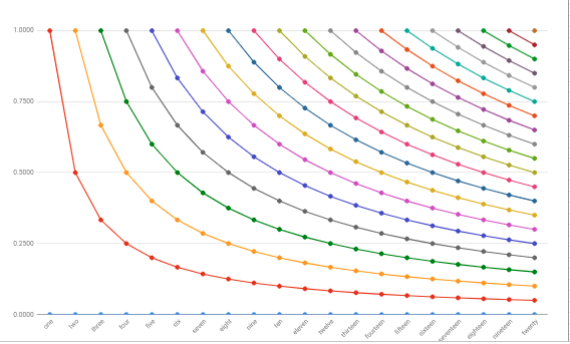
Subdivision can be treated as a coordinate system: name a placement by its fraction of the cycle, not only by conventional notation. A twelve-part grid meets binary, ternary, and polyrhythmic thought.
A ten-hole harmonica layout makes its logic visible. Blow and draw notes show the chord tones it favors, while bends connect the missing colors.
Theory becomes richer when it is heard in context. Follow an interval or rhythm into a style, a place, and a lineage—from African and American traditions to Europe, India, and Asia.
A PRACTICAL LOOP
Choose a modal color → test a tuning or ratio set → place it on a rhythmic grid → translate it to an instrument → listen across the genre atlas.
THE POINT
Good theory gives a player more options. It should make listening sharper, make experimentation more deliberate, and never turn music into a compliance exercise.